Exporting Aesthetics: AI-Generated Futures of the Greater Bay Area
Description
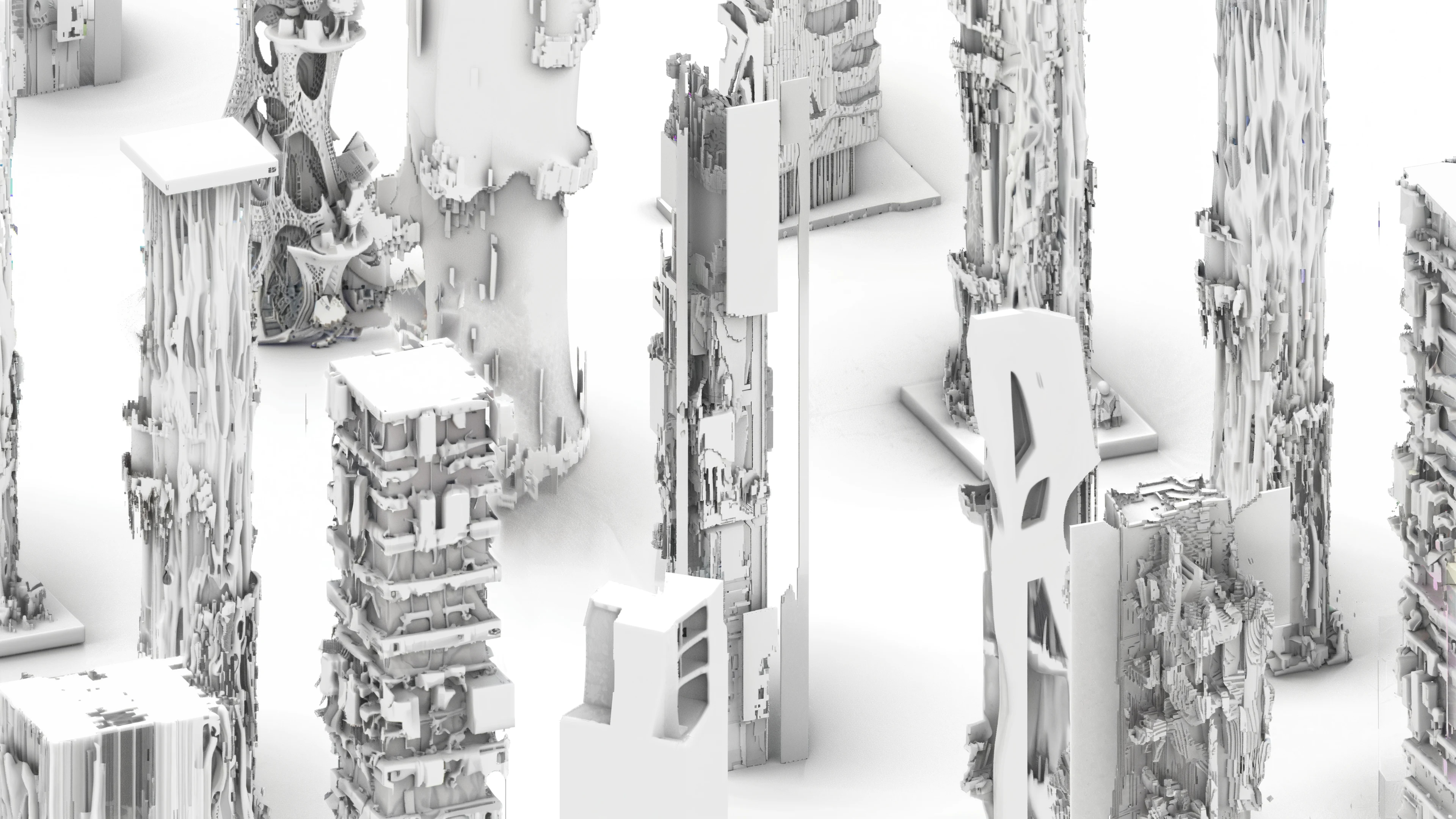
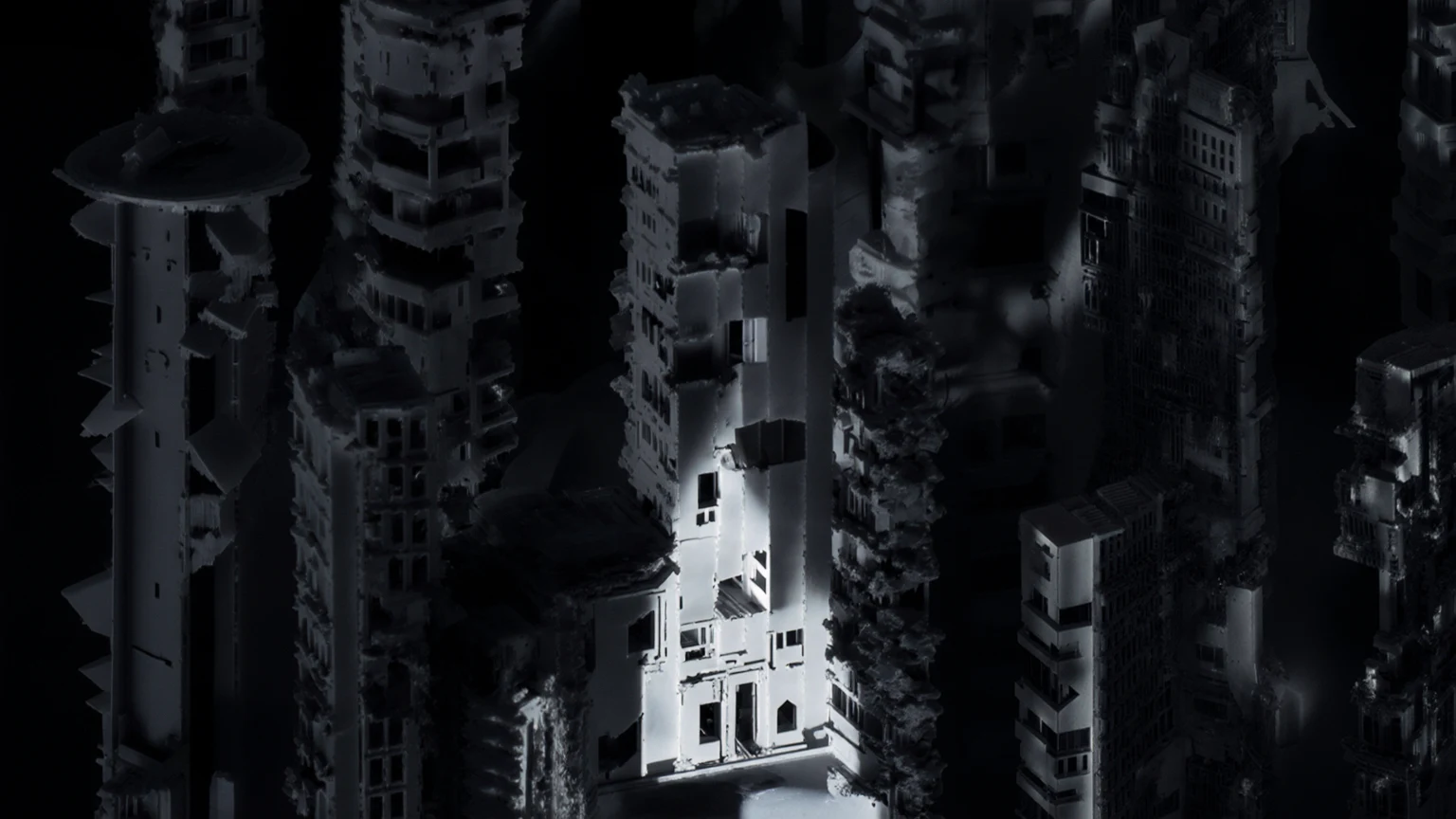
This exhibition explores how artificial intelligence reshapes the architectural imagination, specifically within the cultural and spatial context of the Greater Bay Area. At its core is a cluster of towers generated entirely by machine logic, where datasets, prompts, and fabrication are aligned in a seamless pipeline. Rather than being authored by an individual designer, these towers emerge from a recursive process of training, generating, and materializing—reflecting an aesthetic that belongs as much to algorithms as to architects.
The Greater Bay Area serves as both backdrop and catalyst. Known for its extreme density, hybrid architectural typologies, and rapidly evolving skylines, it provides a fertile ground to speculate on futures that merge urban identity with machine-driven form-making. Each tower embodies a speculative typology rooted in this region: some emphasize density and vertical layering, others respond to climate and circulation, while others abstract vernacular elements into unfamiliar geometries. Collectively, they construct a language of architecture that appears both alien and familiar, simultaneously grounded in context and detached from authorship.
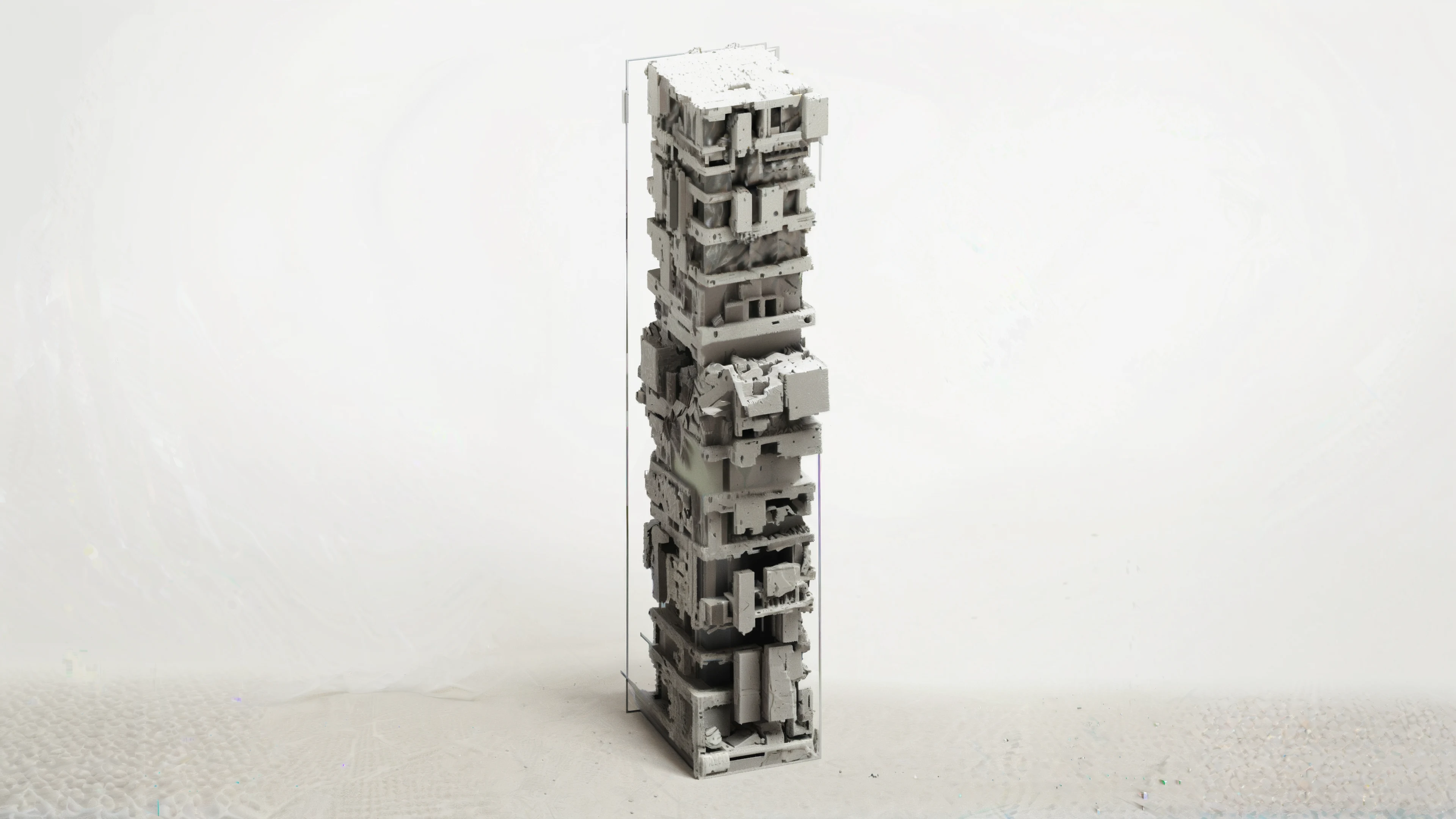
Visitors will encounter these speculative towers as large-scale 3D printed models, their material presence enhanced through coatings, structural reinforcements, and spatial staging. Alongside the physical models, the exhibition reveals the digital workflows—datasets, generative prompts, iterative outputs—that produced them. This transparency invites audiences to reflect on questions of authorship, aesthetics, and responsibility: what does it mean when machines generate our cities? Whose values are encoded in the datasets? What role remains for architects?
By situating generative AI within the real conditions of the Greater Bay Area, the exhibit does not present technology as spectacle, but as a lens to reimagine how urban form might evolve. The towers serve as both artifacts and provocations—material demonstrations of AI aesthetics, and invitations to debate how these aesthetics might influence the architecture and identity of future cities.
Biography
KANS is a design studio founded by Cas Esbach, whose practice navigates the intersections of architecture, technology, and aesthetics. For the 2025 UABB, Cas collaborates with Sandra Baggerman and Stella Zhang to investigate the role of artificial intelligence in shaping new architectural and urban imaginaries. Their collective approach reflects a practice-based methodology informed by academic research and professional design work, spanning Europe and Asia.
Cas Esbach is an architect and professor at the Savannah College of Art and Design, with professional experience at MVRDV, BIG, and Civic Projects. His work emphasizes the integration of AI in the design process, focusing on both speculative aesthetics and practical workflows. Sandra Baggerman is an educator and architect, engaged in design pedagogy and context-driven projects. Her research explores how AI can augment spatial thinking and enrich architectural experimentation. Stella Zhang is the head of InVision Wuhan, where she leads initiatives at the intersection of architectural education, research, and urban transformation in China.
Together, the team brings complementary expertise to the exhibition: practice and pedagogy, theory and fabrication, local insight and global perspective. Their collaboration underscores the potential of AI as both a design partner and a cultural force, opening new conversations around authorship, aesthetics, and the future of urban form.
Materials
Towers: Resin-printed structures with surface sealing and internal reinforcement using threaded rods.
Organisation
KANS
Acknowledgments
Kazunari Kaneko
Yeung Ho Lam
Tinglan Li (Toto)
Qiahan Liu (Stella)
Yiheng Liu (Hannah)
Wuyuzhen Zhang (Nicholas)
Jiayu Xu (Tommy)
Jinkai Chen (Beck)
Qinhong Sun (Qinhong)
Xunhao Zhang (Bai)
Wenxi Zhang (Vivian)
Hongyi Sun (Yolanda)