ÖK(^)B
Description
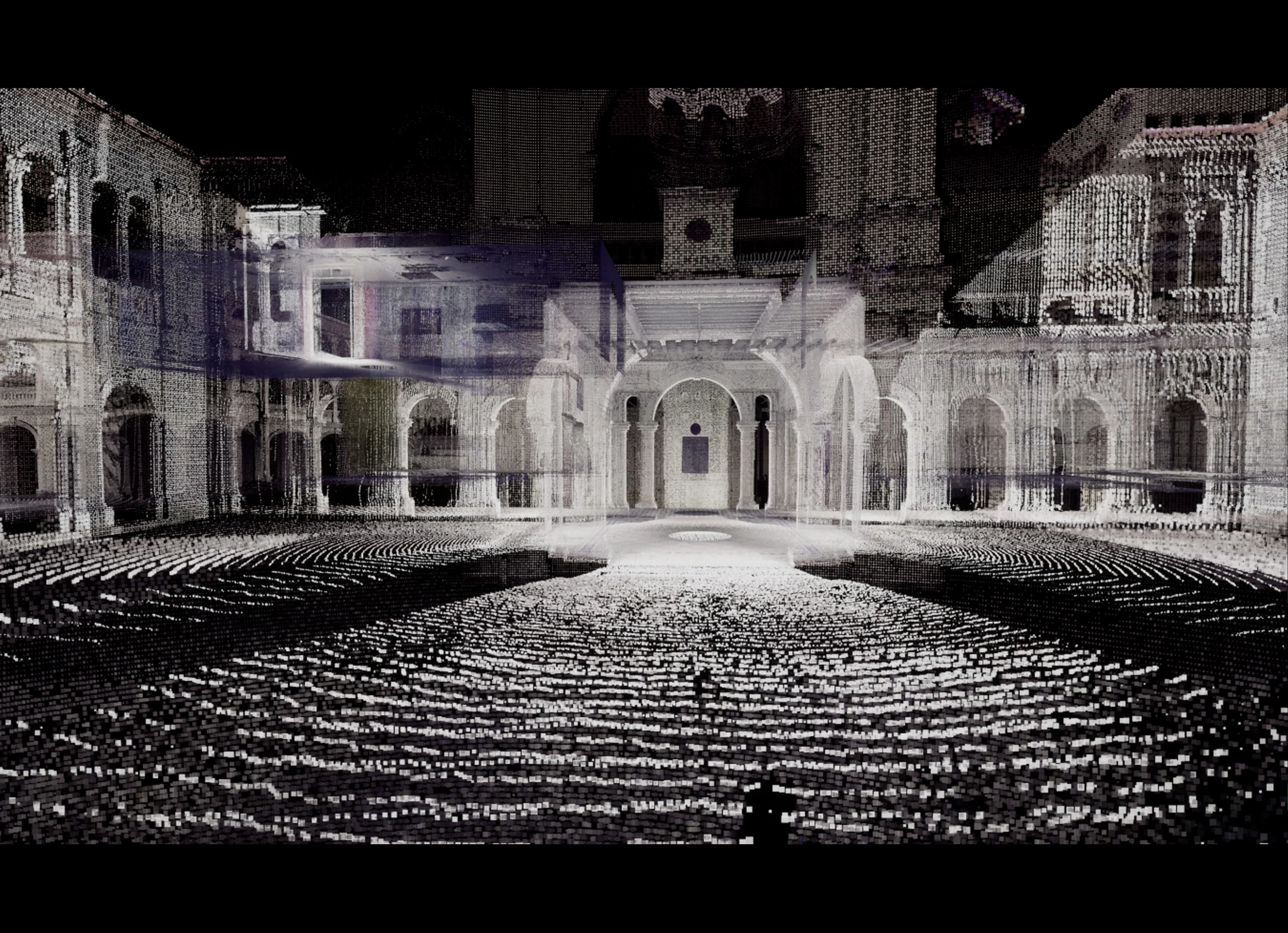
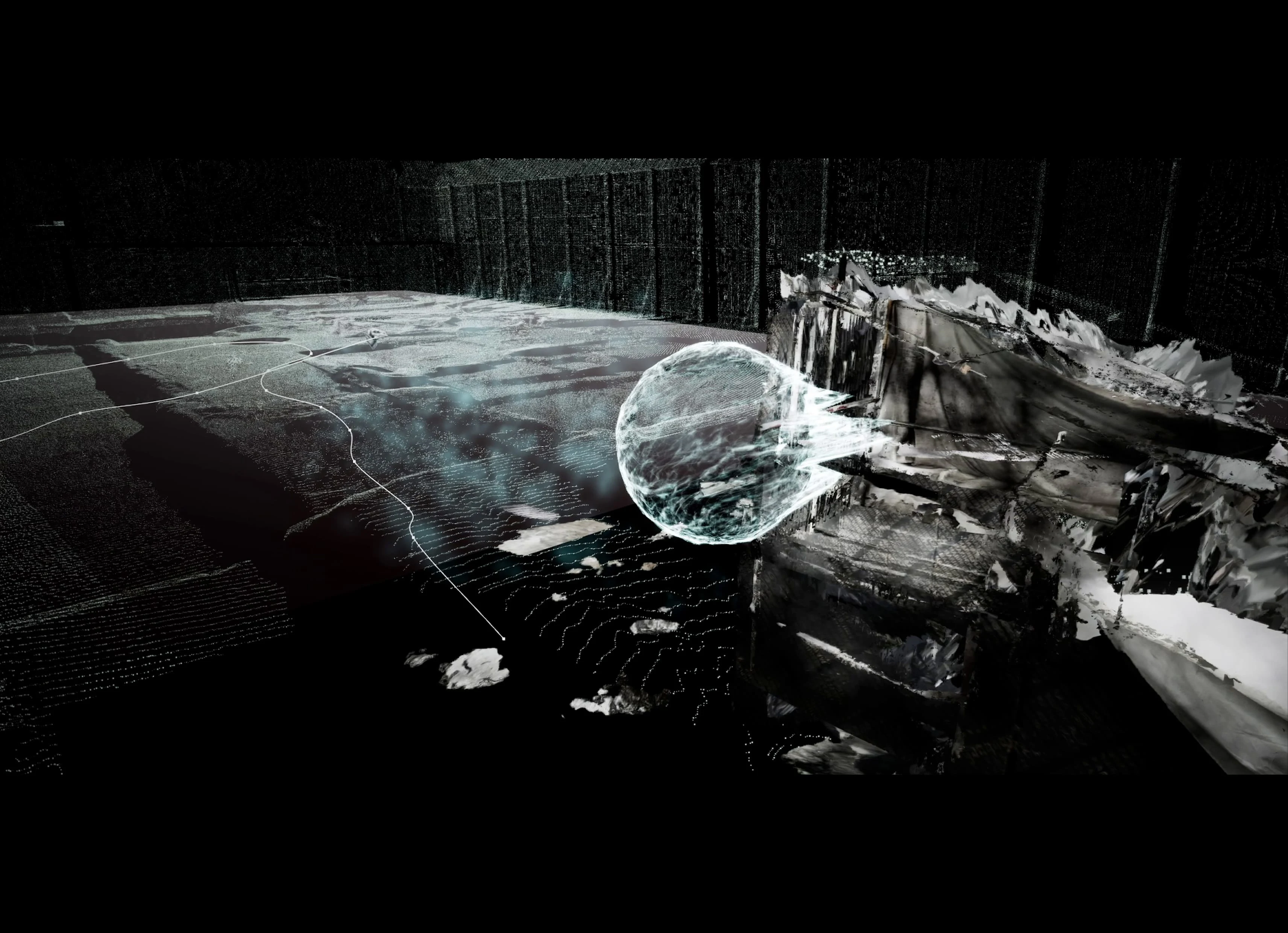
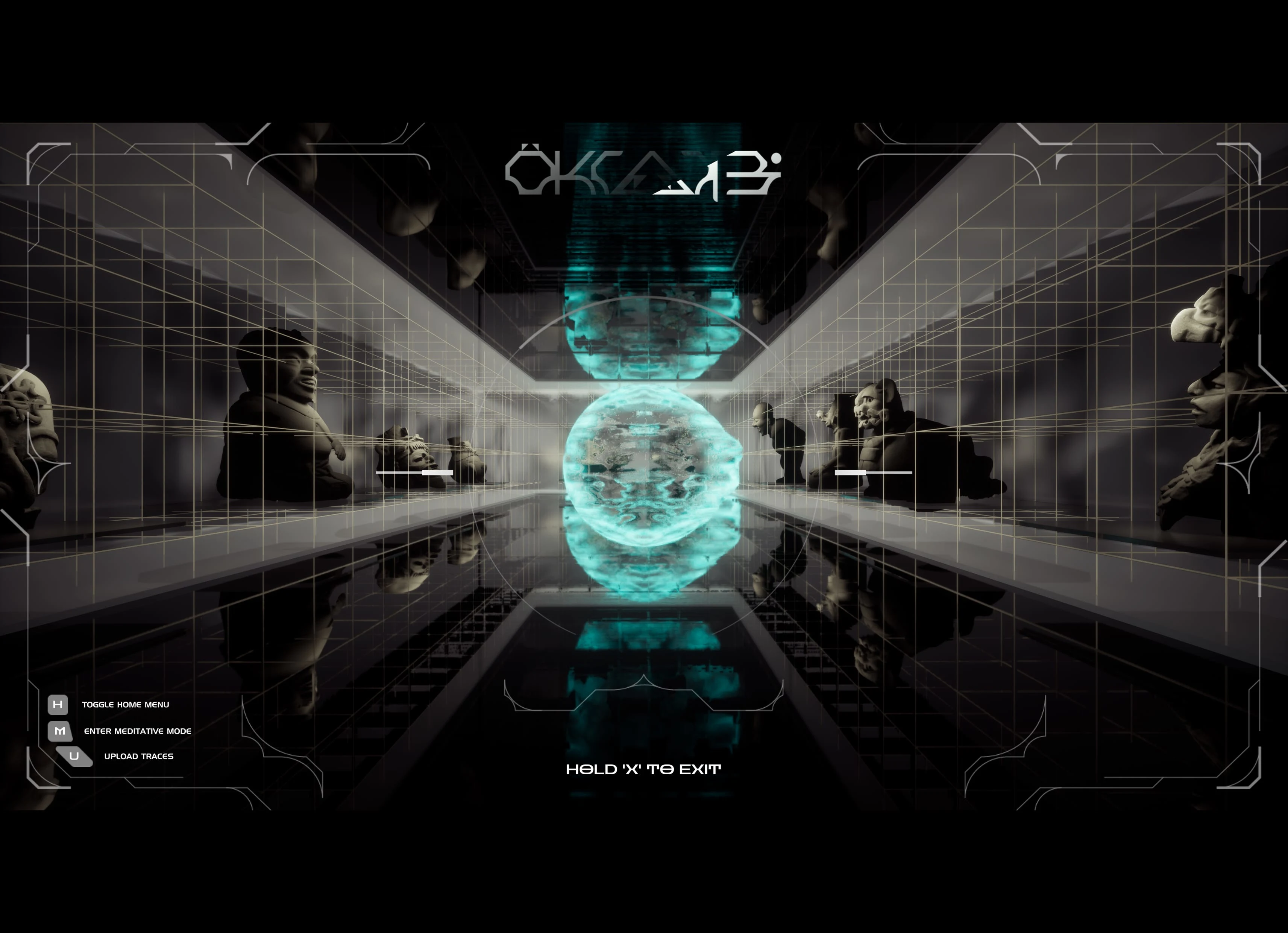
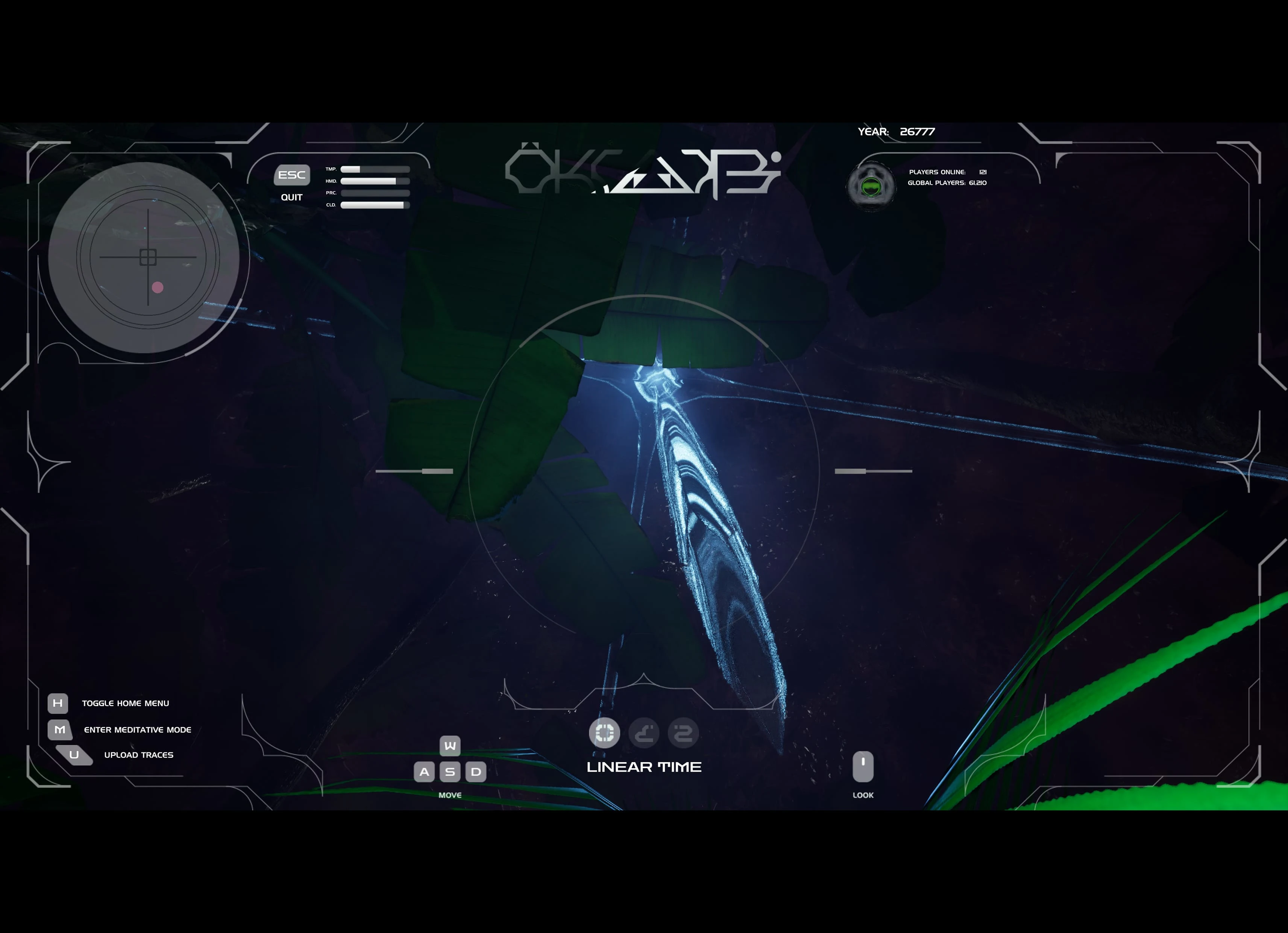
The game is a fully functioning prototype, developed to explore themes of memory, community, and engagement. The project investigates the formation of community through the intertwined realms of digital media and gaming, engaging with questions that transcend geographical boundaries. Commissioned originally by the Singapore Art Museum, it serves as a model for a digital museum—one that invites public interaction through archival functions, user-uploaded multimedia, and the manipulation of digital artworks. It is the prototype of digital museum (museum without wall 2.0), an alternative curatorial framework for digital art archives — one that fosters active participation, collective authorship, and the preservation of intangible cultural narratives. In its original version the game was playable fully online, with each session culminating offline in the creation of downloadable and 3d-printable digital assets. The newly issued version is playable via controller, offline, concealing at its core a secret connection to Hong Kong, allowing once the riddle is solved to continue the exploration beyond digital boundaries.
The field of architecture is undergoing a profound transformation as new practices emerge at the intersection of spatial design, digital technology, and immersive media. With the rapid growth of the game industry and the increasing sophistication of CGI, architects are increasingly called upon to design not only physical spaces but also digital environments, virtual worlds, and hybrid interfaces. This shift expands architectural practice beyond buildings, into the design of interactive narratives, procedural landscapes, and spatialized user experiences. Architects are uniquely positioned to shape the evolving dialogue between the digital and the physical—crafting modes of exchange, presence, and interaction across realities. As the boundaries of architecture blur, spatial literacy becomes crucial in reimagining both how we inhabit and how we relate to environments—virtual or otherwise.
Biography
formAxioms was established in 2018 by Eva Castro and Federico Ruberto. It is a media lab and design agency that promotes research on space, selfhood, performance, art, planetary structures, and economy-ecology. It prototypes quasi-objects (spaces-interfaces-infrastructures), working to re-discover the emancipatory potential of art, architecture and design. FormAxioms’ projects are spaces of retention and immersion challenging the threshold between physical and digital experiences. Part of the lab research is questioning (and building new forms of) archive, conceptualise and designing memory palaces-theatres, spaces that are accessible through games, installations, diagrams, sound and video interfaces, an-architectures, objects, and audio-visual performances. We are critical generalists, explorers of techno-diversity. Our OSs are developed through DIY synthesis of digital and analog tools, hybrids to test collaborative and participatory frameworks.
Materials
PC, screen (or projector), poster prints, 3d printed assets
Organisation
formAxioms
Acknowledgments
ÖK(^)B is a media project by formAxioms
ÖK(^)B is an artwork, a (serious) game and a digital archive developed for
Singapore Art Museum and launched in 2024
ÖK(^)B [Chapter Zero] includes artworks by: Hings Lim, Juan Covelli