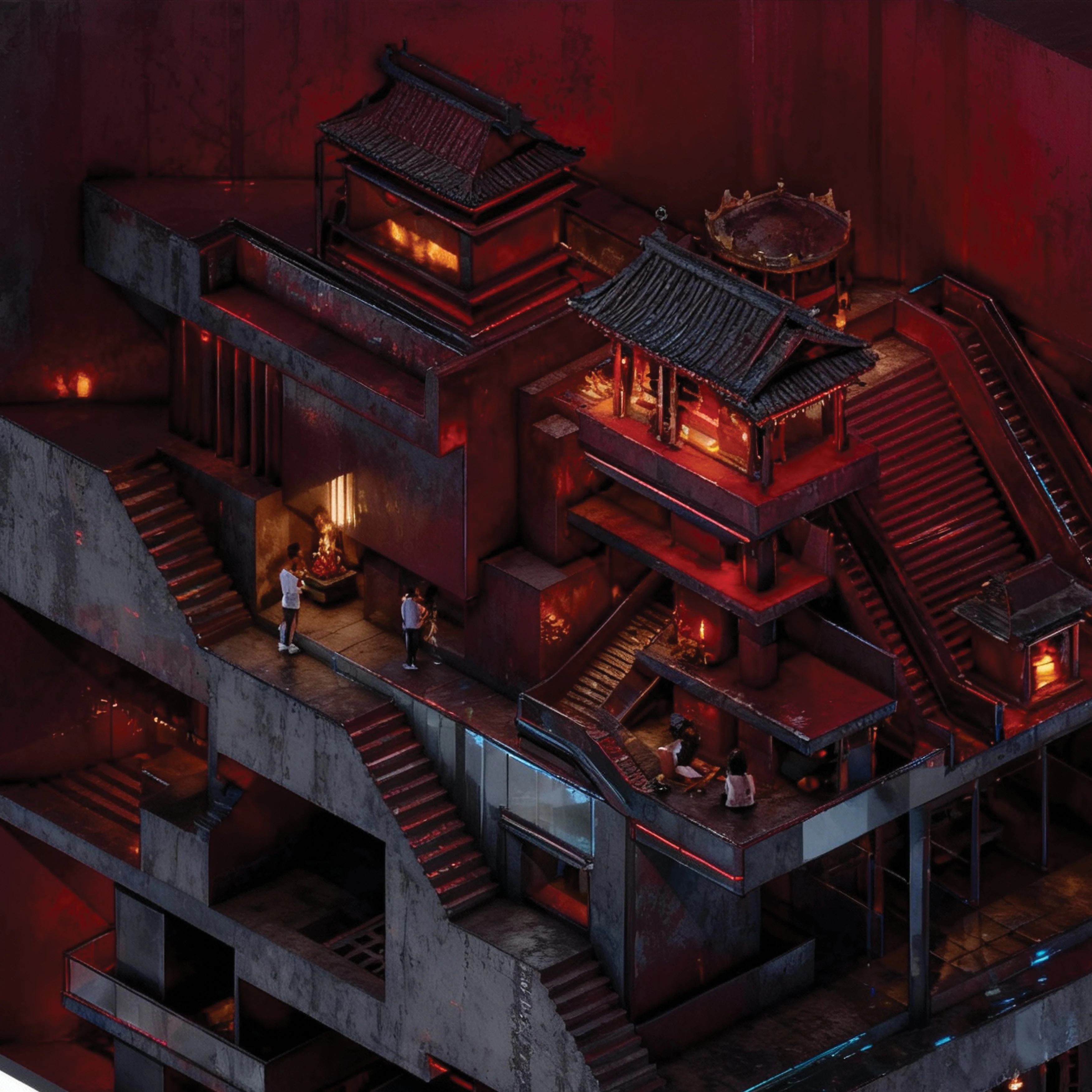
Sanctum in the AI Age: Redefining the Human-Deities Nexus in Urban Future
Description
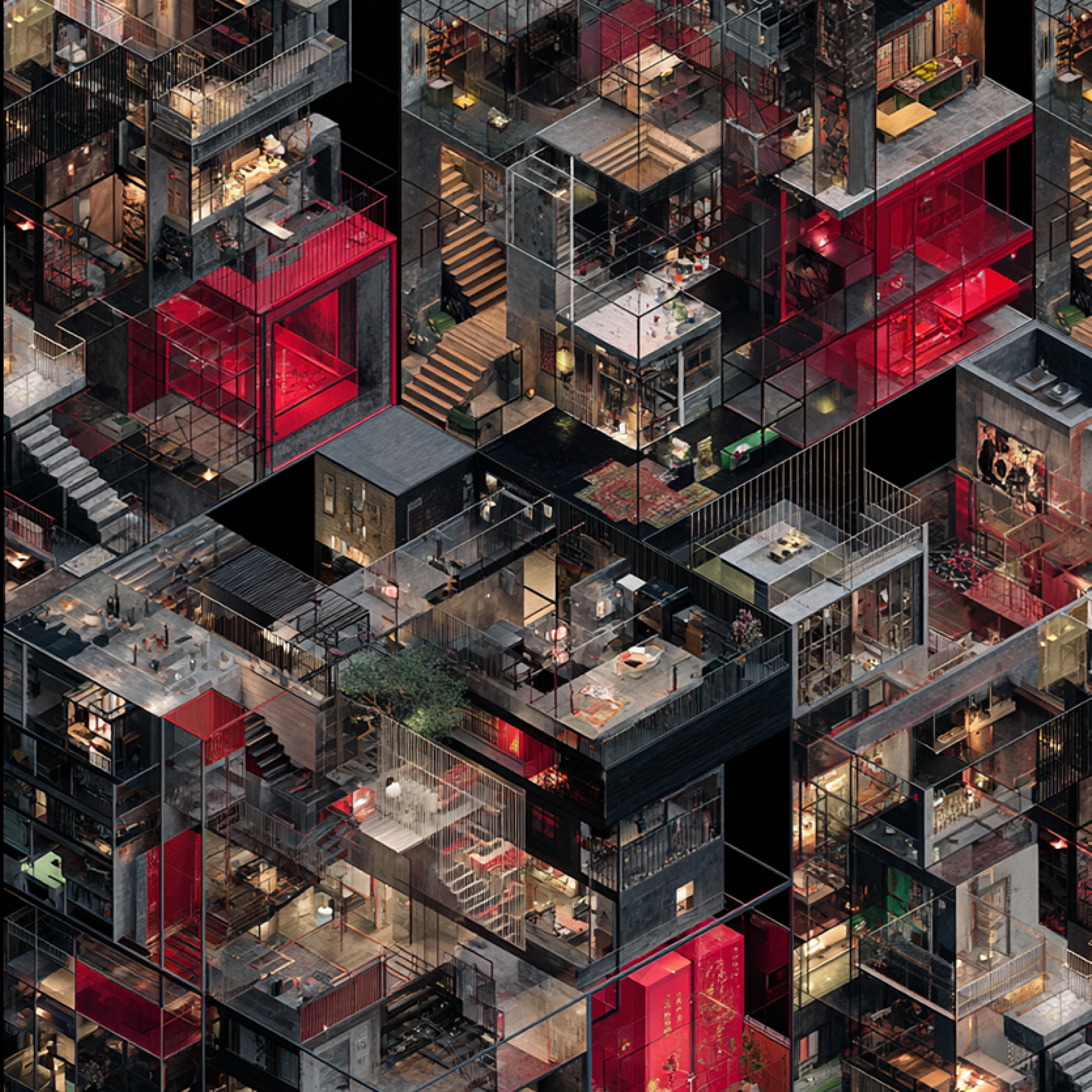
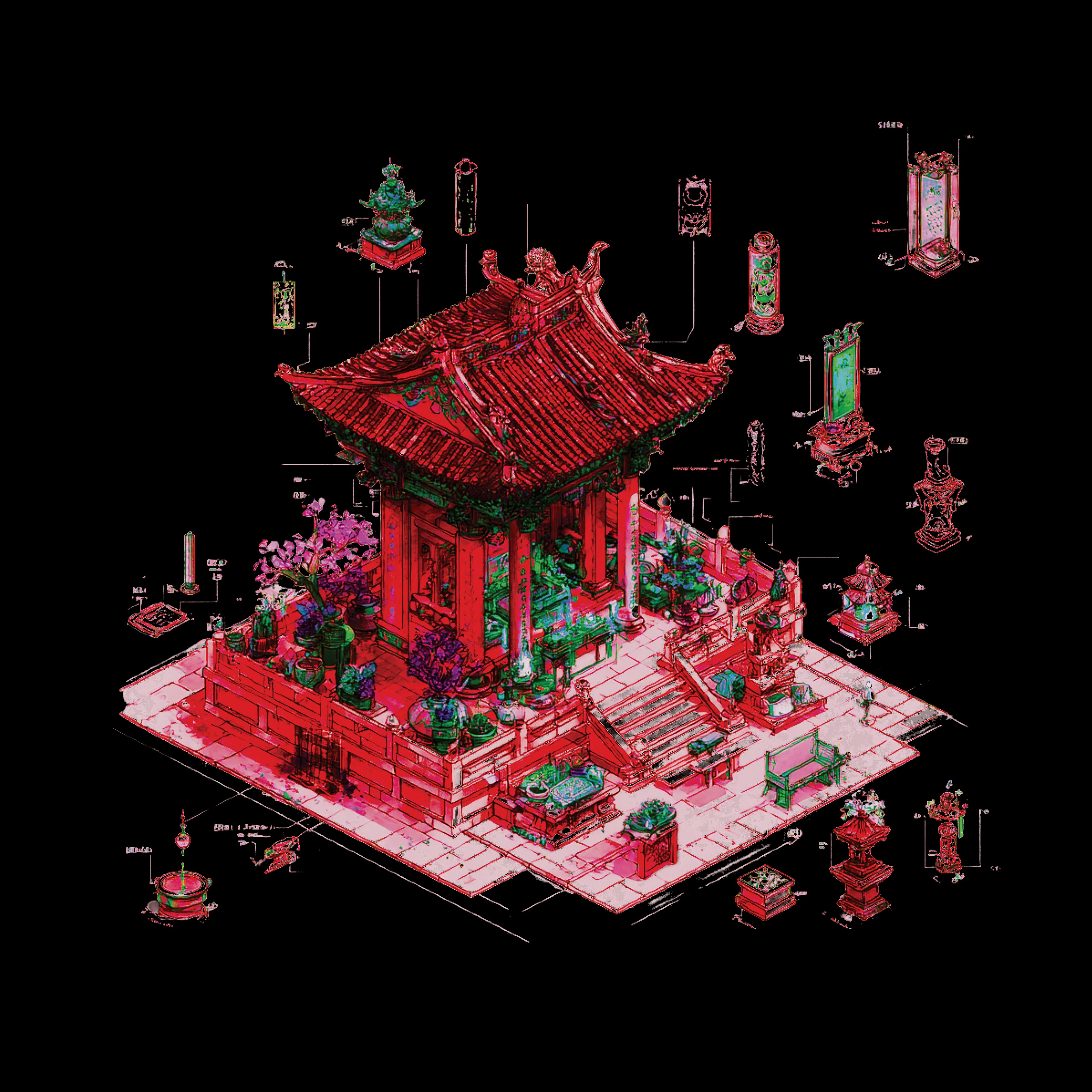
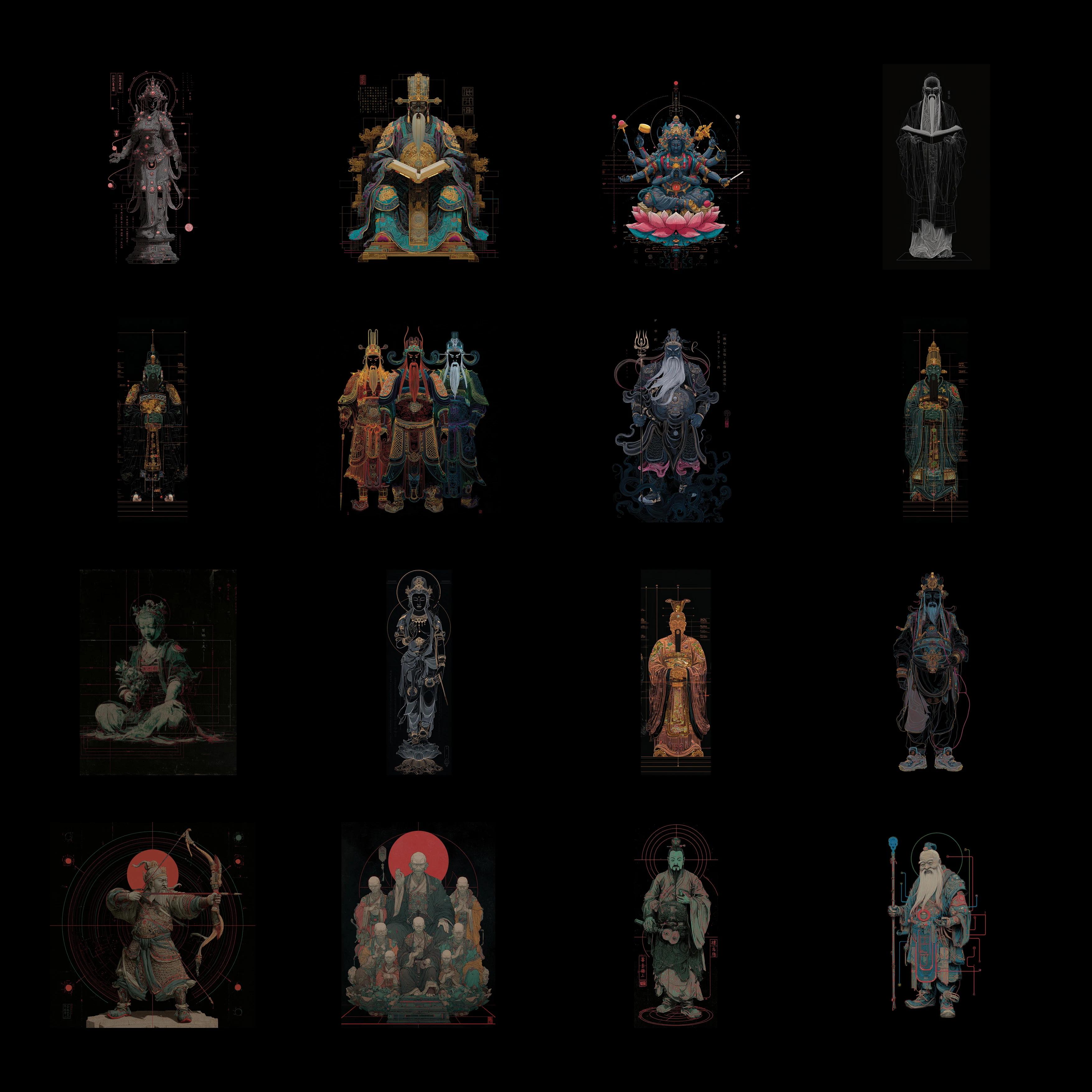
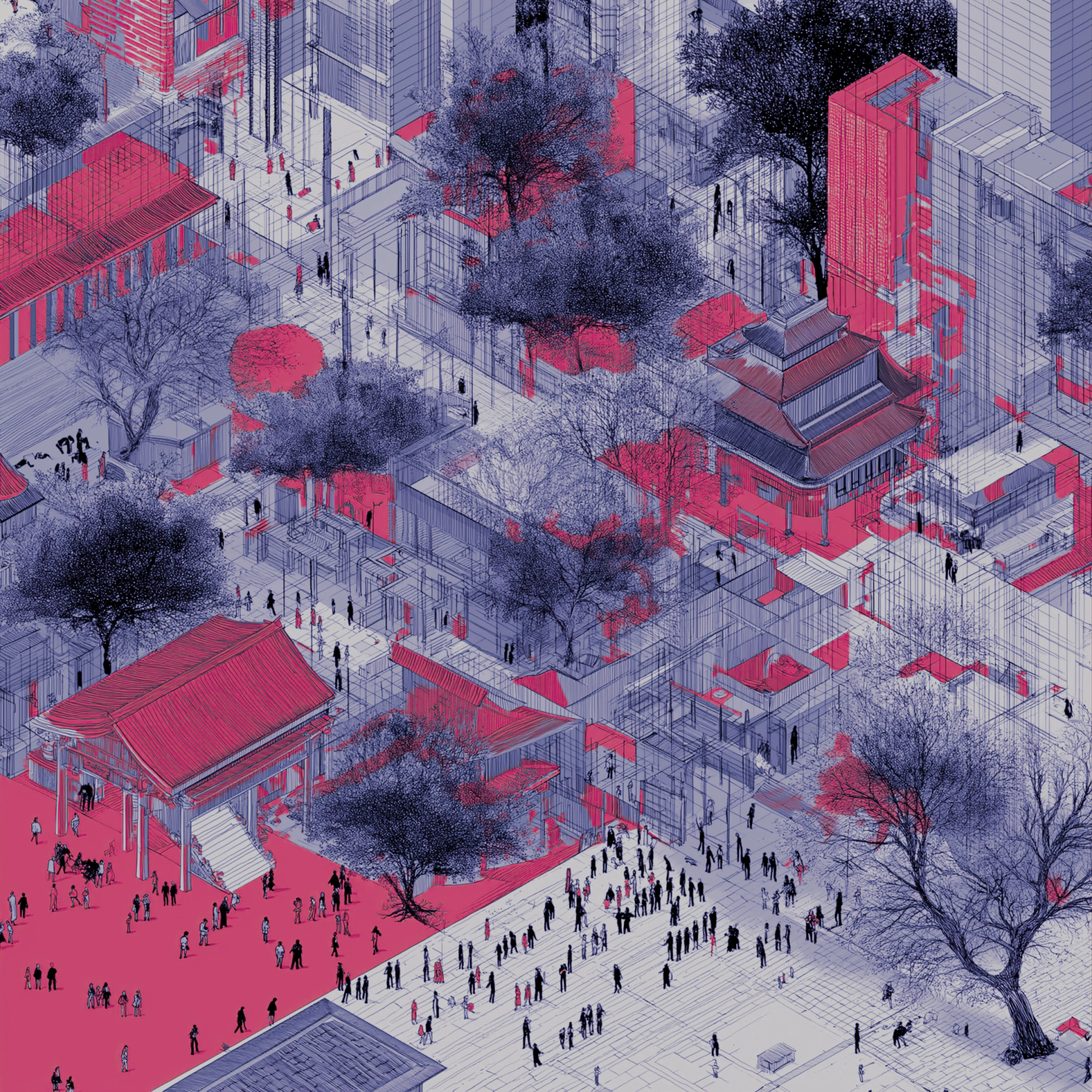
The exhibit presents comprehensive data on Hong Kong’s informal shrines, gathered through field research that documents their spontaneous emergence in urban crevices like alleyways and high-rise gaps. This data is then analyzed using AI tools, to extract and compare key components. We deconstruct the shrines’ elements—material (e.g., recycled wood and plastic), cultural (e.g., deity icons and offerings), and spatial (e.g., compact layouts)—across diverse scenarios, from under-staircase nooks to rooftop ledges, etc. This comparative process reveals significant architectural compromises necessitated by urban density, spatial constraints, and informal status. These community-driven religious spaces demonstrate remarkable adaptability in maintaining spiritual functions while abandoning traditional temple design principles. Key adaptations include vertical spatial organization to maximize limited footprints, material simplification for affordability and portability, infrastructure sharing with surrounding urban elements like shared lighting or drainage, and terrain-responsive distribution that conforms to Hong Kong’s hilly topography and high-rise fabric.
The team collects participants' choices through workshops, allowing the AI to generate individualized shrine designs tailored to their choices. These bespoke visions, blending tradition with futuristic urbanity, are showcased through dynamic 3D projections on the central physical model, fostering a participatory dialogue on spirituality’s resilience in hyper-dense environments.
Biography
Jessica Pui Sze Kong, co-founder of Afloat Studio, a Hong Kong architectural practice focused on innovative designs that explore the “in-between” spatial quality through blurred boundaries and tangled spatial experiences. Passionate about pushing creative limits, she has gained international and local awards, including First Prize in the 57th Central Glass International Architectural Design Competition, Second Prize in the 18th Shelter International Architectural Competition for Students, and First Prize in the 2014 Kai Tak River Design Ideas Competition (Open Group). Her work, showcased in the “Harmony in Diversity” (KL–NJ–HK Roving Architecture Exhibition), reflects her commitment to impactful, diverse design.
Nam Wu is an architect and photographer who uses these dual identities to explore the spaces we inhabit and the lives unfolding in between. As an architect, his work focuses on public buildings, including performance venues, sports facilities, and welfare institutions. As a photographer, he specializes in architectural photography and investigates the urban dynamics that shape city life. His work has been exhibited in “Harmony in Diversity – Connecting the Metropolis by In-Between” (KL–NJ–HK Roving Architecture Exhibition) and the Hong Kong Pavilion at the Venice Biennale 2025. He was awarded an Honorable Mention in the Young Architect Award 2022.
Materials
Powder-coated Steel Frame Structure in Black Color
Model Base in Black Color
3d-printed model
Clear acrylic panels with engraved/ printed graphics
Organisation
Afloat Studio, Point Cloud Studio