Think BIG (Beyond Image Generation) - the cl0udbr1dge
Description
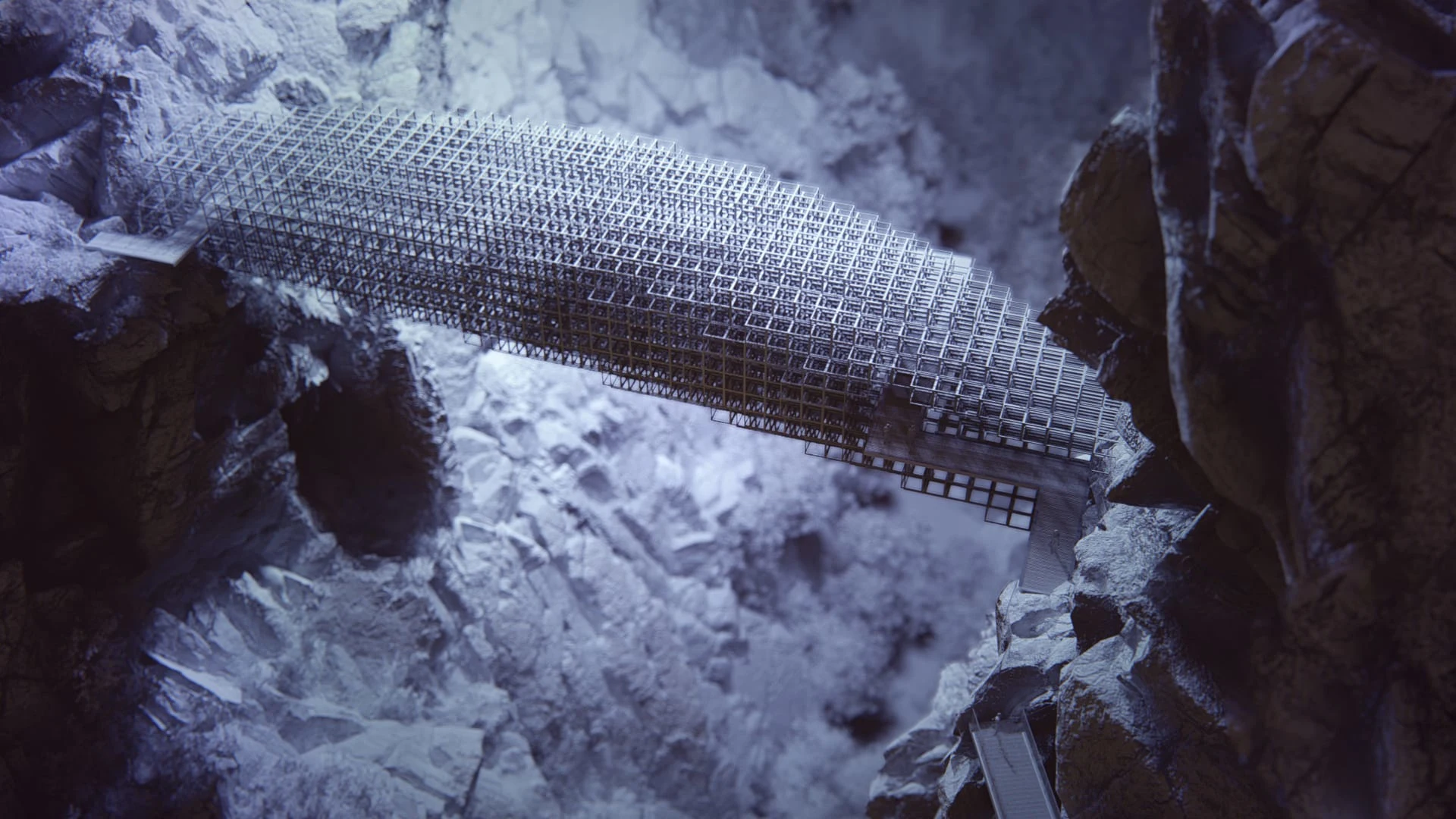
Could we envision a use of algorithms and artificial intelligence that goes beyond the mere generation of images, one that gives rise to optimized architectural forms while also inspiring a truly visionary approach to design? The answer is a concept consisting of a scale (1:40 circa), 3D-printed prototype that embodies a new vision for bridge design. Traditionally, bridges are conceived within established structural and aesthetic paradigms, often echoing historical typologies and culturally codified forms. Cl0udbr1dge challenges these conventions by introducing a design methodology that is deliberately free from stylistic bias, driven instead by performance, adaptability, and algorithmic emergence.
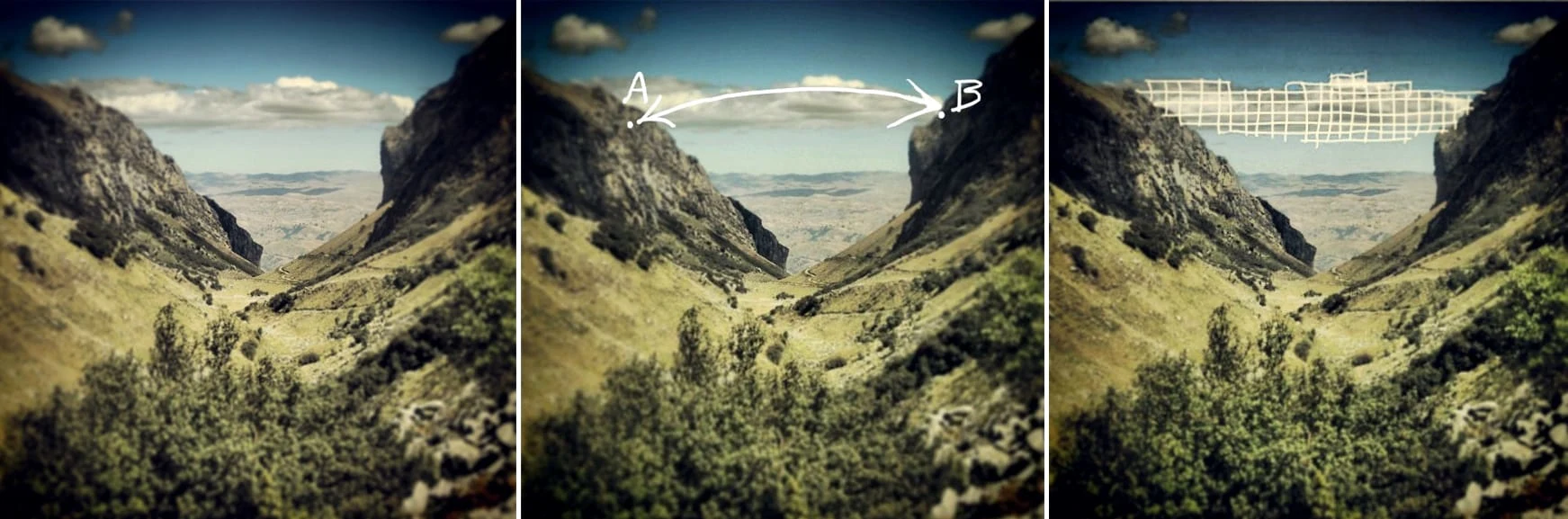
At the heart of the project is the generation of a spatial grid that evolves around a pedestrian path arbitrarily defined between two points. This grid is not a decorative shell, but a structurally active system capable of distributing and balancing loads in a coherent and efficient way. Its morphology is not predefined, but emerges from the dynamic interplay between design intent, environmental context, and digital logic. The design workflow can be fully algorithmic or enriched through the integration of artificial intelligence, creating a synergy between computational modeling and machine-assisted reasoning. This establishes a new paradigm where human creativity is expanded through digital tools, enabling the exploration of non-dogmatic, context-aware geometries. The project also envisions future construction techniques, such as autonomous drones assembling lightweight, grid-based structures in remote or high-altitude areas, offering faster, safer, and more sustainable solutions.
Biography
Arturo Tedeschi – Architect/Designer of the cl0udbr1dge
Arturo Tedeschi is an Italian architect and computational designer internationally recognized for a visionary and sculptural approach that merges research, advanced design methods, materials, and fabrication technologies. His work leverages digital tools to blur disciplinary boundaries, emphasizing both semantic and emotional values. Active across architecture, interiors, stage design, automotive, industrial design, jewellery, watches, furniture, fashion, and art installations, Tedeschi has established a versatile and experimental portfolio. He is also the author of AAD Algorithms-Aided Design, considered the global reference on computational design.
Consultants:
Maurizio Degni is an architect and computational designer specializing in energy and environmental analysis, parametric strategies, and optimization. Since 2010 he has been a key collaborator of Tedeschi, contributing to dozens of projects and building solid expertise in computational design. He lives and works in Milan.
Vittorio Paris is Assistant Professor at the Department of Engineering and Applied Sciences, University of Bergamo, coordinating research with the Form Finding Lab at Princeton University. His collaborations include Penn State, Roma Tre, and SOM. His research focuses on masonry structures, augmented reality, and construction automation.
Carlo Olivieri is Assistant Professor of Structural Mechanics at Pegaso University and adjunct at the Polytechnic University of Bari. Formerly at the University of Salerno, he has collaborated with UC Berkeley and Princeton. His research develops optimization strategies for compressive shapes under seismic loads and low-carbon materials. In 2023 he was structural engineer and site manager of the Angelus Novus vault at the Venice Biennale with SOM and Princeton.
Materials
The bridge model is 3D printed using white resin. The mountains are CNC milled using high-density polystyrene. Complementary scale models (pathways, mockups) are 3D printed using white resin. Printed image on foam board or similar material of adequate thickness.